
Sunday, 10 February 2019
Matte painting
A matte painting is a painted representation of a landscape, set, or distant location that allows filmmakers to create the illusion of an environment that is not present at the filming location. Historically, matte painters and film technicians have used various techniques to combine a matte-painted image with live-action footage. At its best, depending on the skill levels of the artists and technicians, the effect is "seamless" and creates environments that would otherwise be impossible or expensive to film. In the scenes the painting part is static and movements are integrated on it.
Matte painters usually work under the direction of a film’s art director.
The artists are given a description and desired mood of the scene, then they create a concept piece to work from either by hand or in a program like Photoshop or illustrator.The concept must then be approved by the art director, creative director, and/or film director.
Friday, 8 February 2019
Fuzzy Logic and Lotfi Zadeh
Fuzzy Logic and Lotfi Zadeh
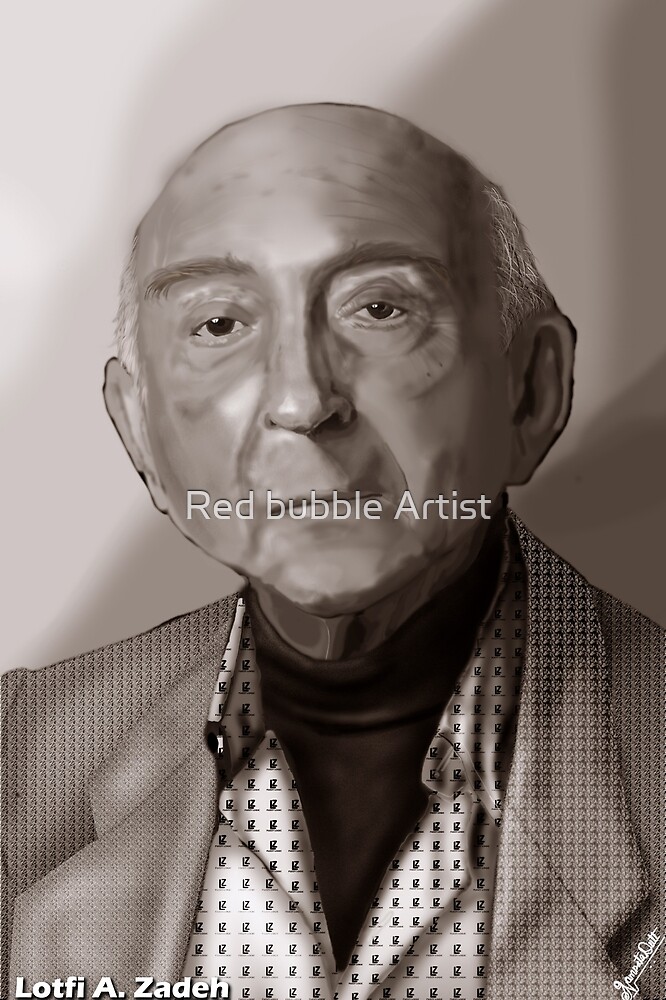
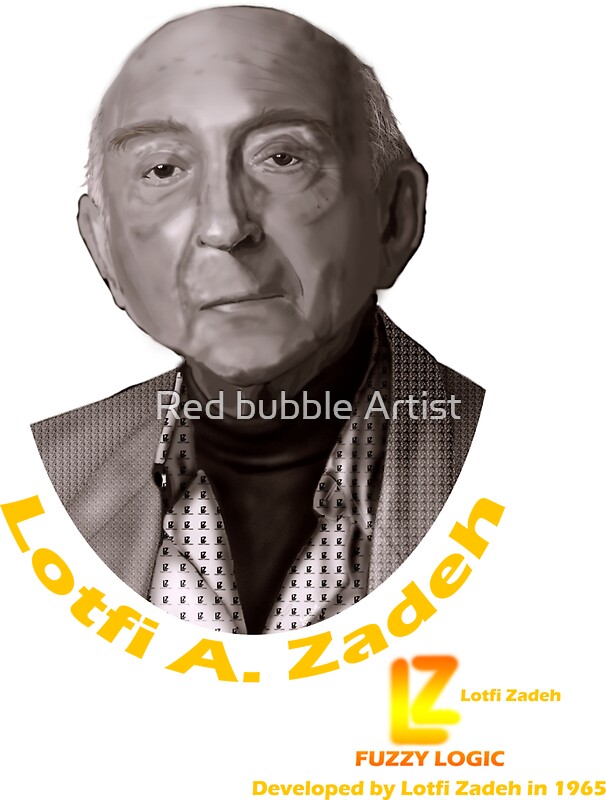
LOTFI ZADEH
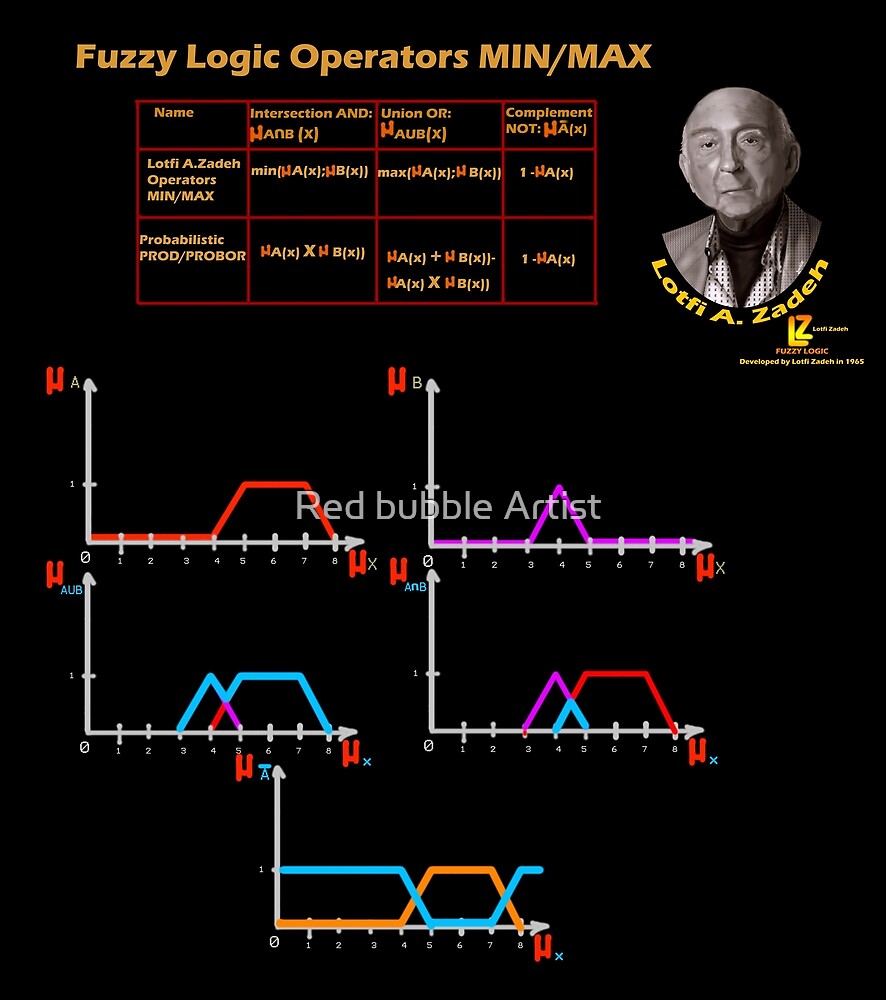
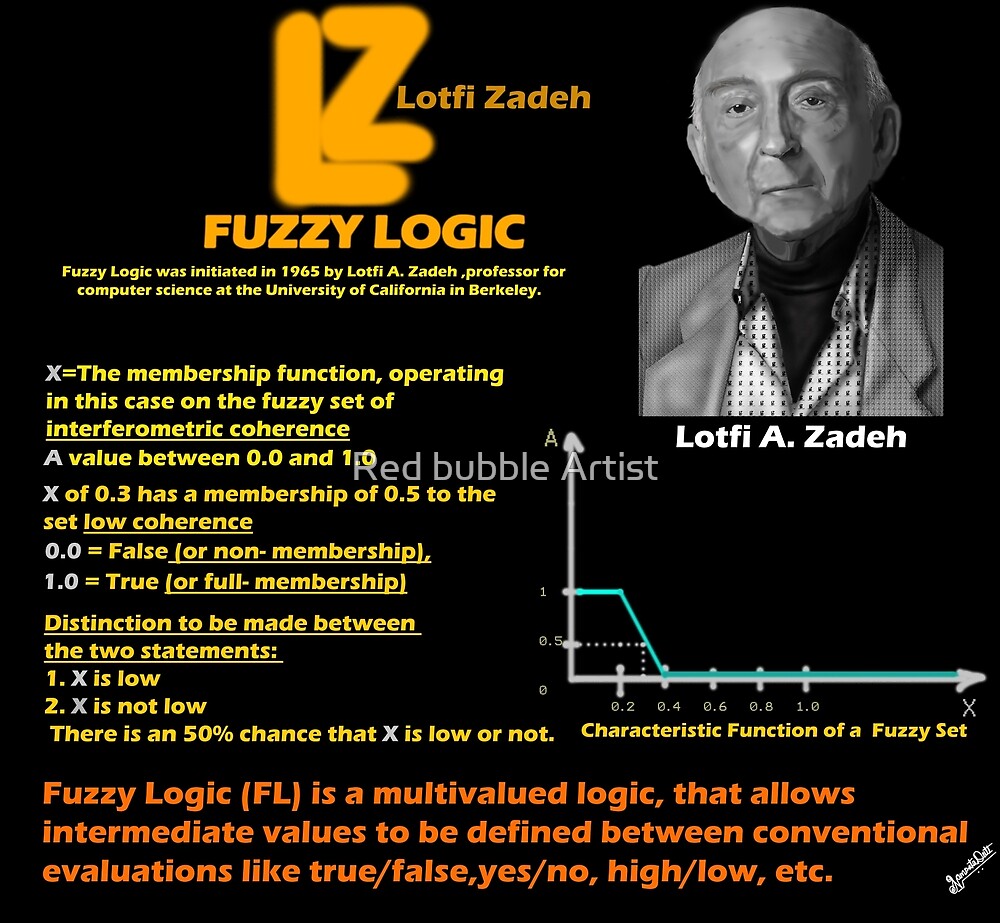
Fuzzy logic – Fuzzy logic is an extension of Boolean logic by Lot fi Zadeh in 1965 based on the mathematical theory of fuzzy sets, which is a generalization of the classical set theory.By introducing the notion of degree in the verification of a condition, thus enabling a condition to be in a state other than true or false, fuzzy logic provides a very valuable flexibility for reasoning, which makes it possible to take into account inaccuracies and uncertainties.
Lotfi Zadeh
==========
Lotfi Aliasker Zadeh is a mathematician, computer scientist, electrical engineer, artificial intelligence researcher and professor emeritus of computer science at the University of California, Berkeley. Lotfi Aliasker Zadeh born on February 4, 1921.He is best known for proposing the fuzzy mathematics consisting of those fuzzy related concepts: fuzzy sets, fuzzy logic, fuzzy algorithms, fuzzy semantics, fuzzy languages,fuzzy control, fuzzy systems, fuzzy probabilities,fuzzy events and fuzzy information.He is a founding member of Eurasian Academy.
According to Google Scholar, as of September 2015 Zadeh’s work had been cited 150,852 times with the 1965 “Fuzzy Sets” paper receiving 58,251.
Fuzzy logic – Fuzzy logic is an extension of Boolean logic by Lot fi Zadeh in 1965 based on the mathematical theory of fuzzy sets, which is a generalization of the classical set theory.By introducing the notion of degree in the verification of a condition, thus enabling a condition to be in a state other than true or false, fuzzy logic provides a very valuable flexibility for reasoning, which makes it possible to take into account inaccuracies and uncertainties.
Lotfi Zadeh
==========
Lotfi Aliasker Zadeh is a mathematician, computer scientist, electrical engineer, artificial intelligence researcher and professor emeritus of computer science at the University of California, Berkeley. Lotfi Aliasker Zadeh born on February 4, 1921.He is best known for proposing the fuzzy mathematics consisting of those fuzzy related concepts: fuzzy sets, fuzzy logic, fuzzy algorithms, fuzzy semantics, fuzzy languages,fuzzy control, fuzzy systems, fuzzy probabilities,fuzzy events and fuzzy information.He is a founding member of Eurasian Academy.
According to Google Scholar, as of September 2015 Zadeh’s work had been cited 150,852 times with the 1965 “Fuzzy Sets” paper receiving 58,251.
Zadeh, in his theory of fuzzy sets, proposed using a membership function (with a range covering the interval [0,1]) operating on the domain of all possible values. He proposed new operations for the calculus of logic and showed that fuzzy logic was a generalisation of classical and Boolean logic. He also proposed fuzzy numbers as a special case of fuzzy sets, as well as the corresponding rules for consistent mathematical operations (fuzzy arithmetic).
Fuzzy Logic and Lotfi Zadeh
 Lotfi Zadeh is also credited, along with John R. Ragazzini, in 1952, with having pioneered the development of the z-transform method in discrete time signal processing and analysis. These methods are now standard in digital signal processing, digital control, and other discrete-time systems used in industry and research. He is an editor of
International Journal of Computational Cognition.
Fuzzy Logic and Lotfi Zadeh
Lotfi Zadeh is also credited, along with John R. Ragazzini, in 1952, with having pioneered the development of the z-transform method in discrete time signal processing and analysis. These methods are now standard in digital signal processing, digital control, and other discrete-time systems used in industry and research. He is an editor ofInternational Journal of Computational Cognition.
Notable awards
===========
Eringen Medal (1976)
IEEE Hamming Medal (1992)
Rufus Oldenburger Medal (1993)
IEEE Medal of Honor (1995)
2012 BBVA Foundation Frontiers of Knowledge Award
ACM Fellow
IEEE Fellow
AAAS Fellow
AAAI Fellow
Member of the National Academy of Engineering
Founding Member of Eurasian Academy
===========
Eringen Medal (1976)
IEEE Hamming Medal (1992)
Rufus Oldenburger Medal (1993)
IEEE Medal of Honor (1995)
2012 BBVA Foundation Frontiers of Knowledge Award
ACM Fellow
IEEE Fellow
AAAS Fellow
AAAI Fellow
Member of the National Academy of Engineering
Founding Member of Eurasian Academy
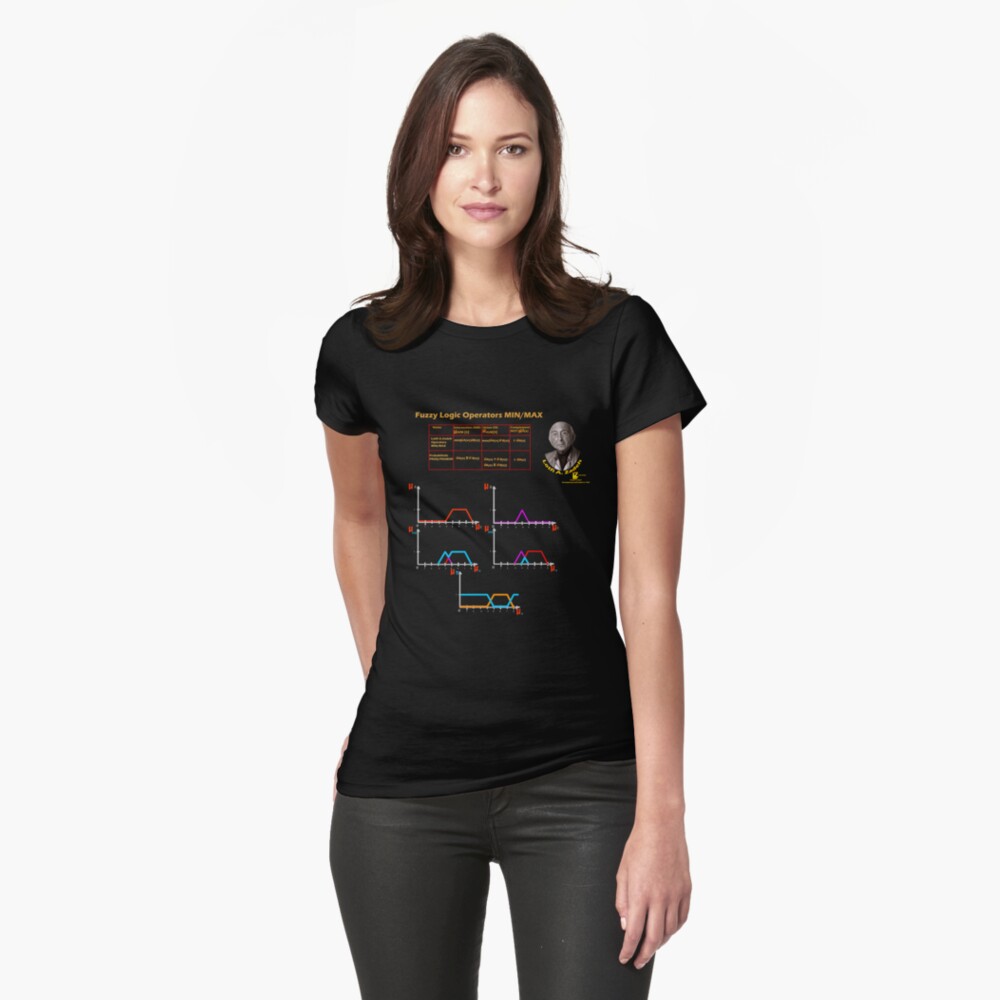
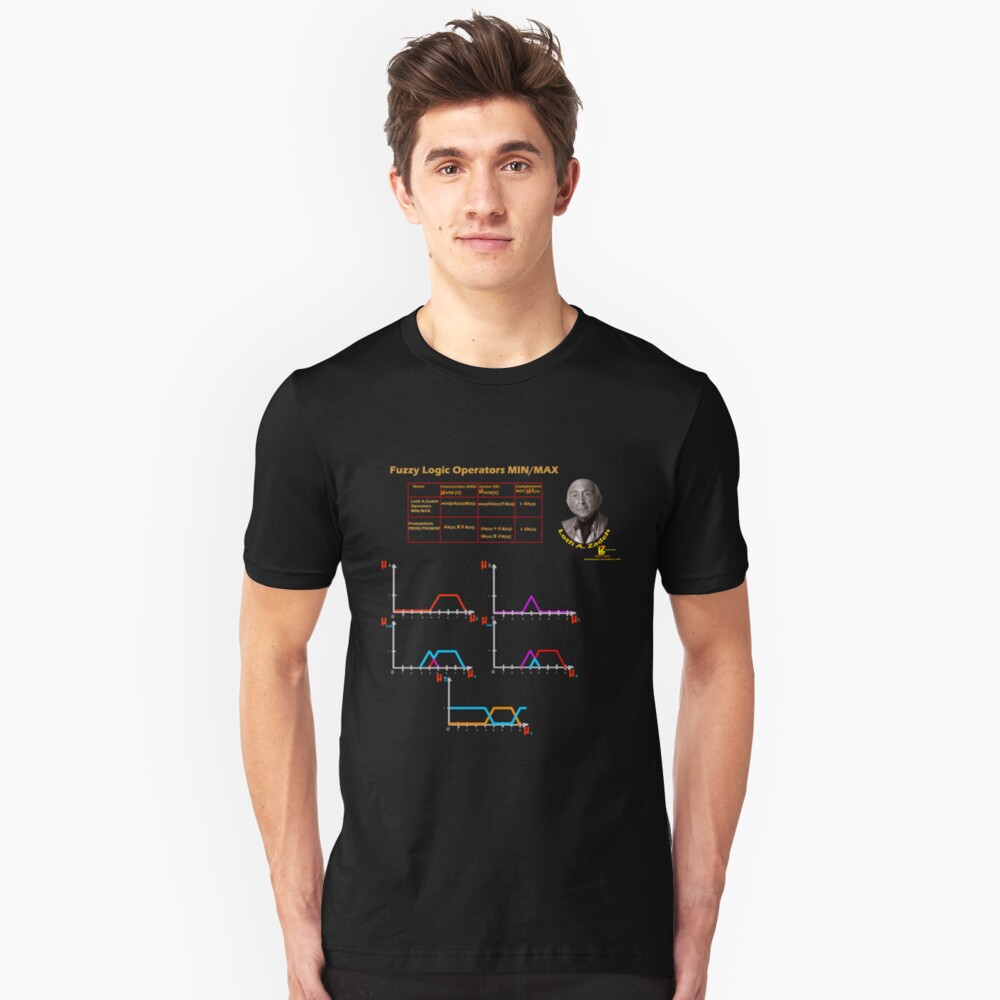
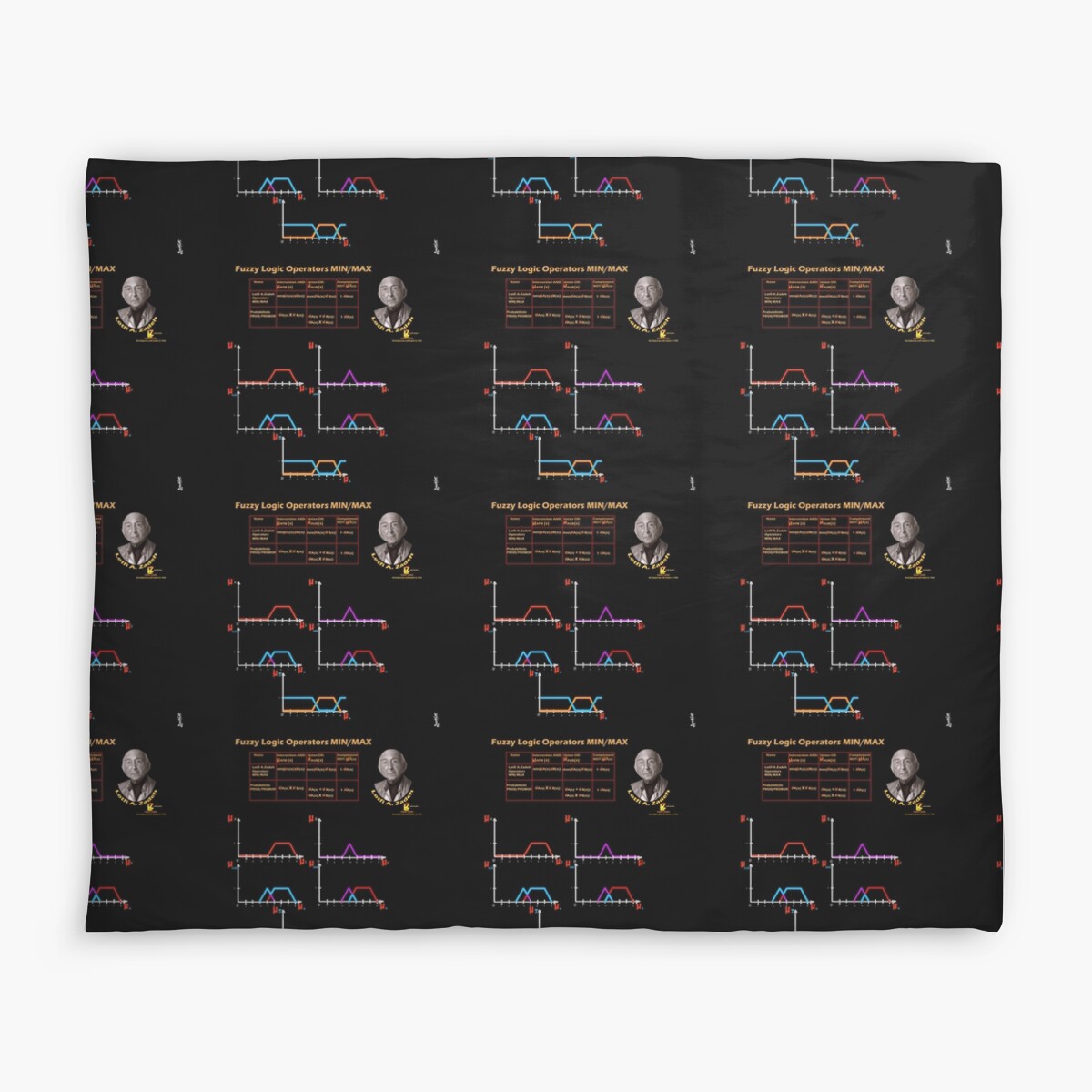 |
| Operation of Fuzzy Logic Duvet Covers |
Wednesday, 6 February 2019
Artist Nandika Dutt - Fine Art America
ARTIST NANDIKA DUTT - FINE ART AMERICA
Paintings-Acrylic,Oil,water color
Abstract Art & Modern Art -
Abstract Abstract art uses a visual language of shape, form, color and line to create a composition which may exist with a degree of independence from visual references in the world. Modern Art Modern art includes artistic works produced during the period extending roughly from the 1860s to the 1970s, and denotes the style and philosophy of the art produced during that era.The term is usually associated with art in which the traditions of the past have been thrown aside in a spirit of experimentation. Modern artists experimented with new ways of seeing and with fresh ideas about the nature of materials and functions of art. A tendency away from the narrative, which was characteristic for the traditional arts, toward abstraction is characteristic of much modern art. More recent artistic production is often called Contemporary art or Postmodern art.
Abstract Art & Modern Art -
Abstract Abstract art uses a visual language of shape, form, color and line to create a composition which may exist with a degree of independence from visual references in the world. Modern Art Modern art includes artistic works produced during the period extending roughly from the 1860s to the 1970s, and denotes the style and philosophy of the art produced during that era.The term is usually associated with art in which the traditions of the past have been thrown aside in a spirit of experimentation. Modern artists experimented with new ways of seeing and with fresh ideas about the nature of materials and functions of art. A tendency away from the narrative, which was characteristic for the traditional arts, toward abstraction is characteristic of much modern art. More recent artistic production is often called Contemporary art or Postmodern art.
Fantasy World-
A fantasy world is a fictional universe used in fantasy fiction, for example in novels and games. Typical worlds involve magic or magical abilities and often, but not always, either a medieval or futuristic theme. Some worlds may be a parallel world tenuously connected to Earth via magical portals or items; a fictional Earth set in the remote past or future; or an entirely independent world set in another universe. Many fantasy worlds draw heavily on real world history, geography and sociology, and also on mythology and folklore.Fairy, Unicorn, fairyland and fantasy images.
GLOBAL WARMING -
Global warming and climate change can both refer to the observed century-scale rise in the average temperature of the Earth's climate system and its related effects, although climate change can also refer to any historic change in climate.
Our shower curtains ($65) are made from 100% polyester fabric and include 12 holes at the top of the curtain for simple hanging from your own shower curtain rings. The total dimensions of each shower curtain are 71" wide x 74" tall.
Bring your artwork to life with the stylish lines and added depth of an acrylic print. Your image gets printed directly onto the back of a 1/4" thick sheet of clear acrylic.
The image is the art - it doesn't get any cleaner than that!
All acrylic prints ship within 3 - 4 business days and arrive "ready to hang" with four aluminum mounting posts (Option #1) or hanging wire (Option #2).
The high gloss of the acrylic sheet complements the rich colors of any image to produce stunning results.
There are two different ways to mount your acrylic print.
Option #1 (Mounting Posts) - Attach your print to your wall with four aluminum mounting posts. The cylindrical cap of each mounting post can be removed, allowing you to thread a small screw along the center axis of the of post and into the wall. When you're finished, simply reattached each cap, and you're done. The mounting posts act as stand-offs and keep your print separated from the wall by 1". All of the required mounting hardware (i.e. posts, screws, and wall anchors) is included with your print. Click here for mounting details.
Option #2 (Hanging Wire) - With this option, your acrylic print is attached to a 1/4" thick black board which has a wooden frame and hanging wire attached to the back. There are no metal mounting posts at the corners. Simply put a nail in your wall, hang your print from the hanging wire, and you're done. Due to the thickness of the black board and mounting frame, your print is separated from the wall by 1.50" Click here for mounting details.
Subscribe to:
Comments (Atom)